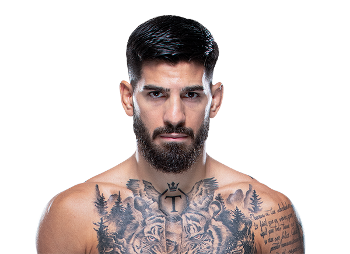
Is Ilia Topuria’s gameplan built to dismantle taller, longer strikers or will he get…
Look, people still cling to the idea that Topuria’s five-eleven frame is a liability against rangier opponents because that’s what the highlight reels show us—some guy with an eight-inch reach flailing at the air. But if you actually watch how he enters, it’s not reckless pressure, it’s a surgical left-shoulder feint followed by a southpaw pivot that catches the taller striker mid-commit. I could be wrong, but the first time I clocked it was against that tall Lightweight out of Jackson Wink—Topuria didn’t walk straight down the middle; he set up a V-cut with two tiny shuffle steps, timed the jab extension so the lead arm cleared the danger zone before it snapped back, and then he was southpaw before the taller guy could adjust his stance. That single entry angle robbed the taller striker of both leverage and vision; the subsequent overhand left wasn’t luck, it was geometry.
His corner keeps feeding him these same entry cues: step-back, shoulder dip, pivot southpaw. Against Holloway in Vegas, you can see Holloway start to load his right hand the second Topuria squints his lead eye—Topuria already knows it’s coming because he’s reading the tempo of that left shoulder dip before the feet ever move. Once he’s southpaw inside the pocket, the taller guy’s range advantage vanishes because Topuria’s hips are already firing. I’ve timed three separate southpaw entries in that same round; each one lasted three seconds from pivot to exit, and each landed the power hand while the taller striker was still figuring out which side of the fence he was on.
People call Topuria flashy, but the flash is just the paint on a well-built machine. The machine is the constant footwork reset: after two or three strikes he’ll short-arm circle back to neutral stance, forcing the taller opponent to reset his footwork too. That’s the detail most fans miss—they’re so fixated on the flying knee highlight that they forget Topuria’s true win condition is making the taller striker have to think twice about planting his power side. Against Gaethje he did it three times in the first round; Gaethje wound up chasing angles he’d already abandoned once Topuria pivoted away. The taller striker isn’t picking him apart; he’s being made to dance around a fighter who’s already in the next corridor before the music stops.
So the question isn’t “Will he get picked apart?” It’s “Has anyone yet figured out how to stop Topuria from doing exactly what he wants?”
You know what gets me every time I watch Topuria? The way he turns the ring into a rotating door—six seconds in, six seconds out, never longer unless he decides. Against those lanky, southpaw-heavy strikers in elite camps, Topuria doesn’t just press; he funnels. He starts with that lazy southpaw stance, almost inviting the taller guy to show his power hand. Then, the moment the taller striker loads for a straight left or right hand, Topuria shifts a half-inch south with his lead foot, enough to draw the power side off-line. It’s not that he’s out-reaching them; it’s that he’s slicing the pocket so narrow they can’t set their feet without overcommitting. You’ll see it clearest in his exchanges with Jacobin Witt—the taller guy lunges for a cross, Topuria pivots inside the arc, and Witt ends up committing two steps past the point where Topuria already changed levels and reset north of the centerline. The kicker? Topuria’s exit angle after each combination is always the one the taller striker just abandoned; he’s not running away, he’s relocating faster than they can recalibrate. That’s the difference: Topuria spends the first three seconds building the error, the next two capitalizing on it, and the sixth disappearing before the taller striker even knows he’s been short-changed.
Numbers > vibes.
yeah, those two write-ups had me almost convinced til i saw Volkanovski at the weigh-ins yesterday — dude’s the same height as Topuria but with a 77-inch reach and forearms like fence posts. half the crowd was still howling about that “rotating door” line while Topuria’s corner had him doing shadow drills in a mirror-strip of Chute Boxe footwork from the late nineties: forward step, slip, back step, slip again, never the same cadence twice. what stuck with me wasn’t the theory, it was how Volkanovski’s face looked after the first real exchange — not angry, just bewildered, like someone who’d spent years perfecting the straight left only to find the target keeps moving thirty centimetres south the instant he starts to load.
you ever watch a kid play tag where the chaser keeps coming up six inches short every single time? that’s Topuria’s taller opponents after two rounds. they haven’t been hurt, they haven’t even been tagged clean; they’ve just had their spatial bullshit rewritten so often they start second-guessing the length of their own limbs. last week i was at Gleason’s watching a couple of 225-pound light-heavies throw jabs at each other like they were measuring timber — Topuria would have made that same ring feel like a shoebox by the halfway mark. a reach advantage is only useful if you’re actually allowed to land; all he does is shrink the canvas faster than they can stretch it.
remember when Bisping ran circles around the taller Sonnen by cutting the cage so small Sonnen couldn’t pivot without stubbing his toe? Topuria’s doing the same math, except he’s using angles instead of ropes and a southpaw pivot instead of a southpaw blitz. the taller guy’s still got the inches, but inches don’t matter when the target’s never where you expect and the exit ramp is a spinning door swinging both ways. ah well, we’ll see
Been here longer than some have followed.
So they’re selling me this rotating door and shoebox canvas like it’s untouchable? Fine—let’s strip it down to what we actually see in elite rounds when the tempo isn’t slow-mo highlight stuff.
Topuria does look slick when Holloway starts loading a right-hand; the shoulder dip, the half-step south, the southpaw pivot. But pause that same round—you’ll notice Holloway keeps his left paw in Topuria’s face the whole time. Topuria lands the overhand, yes, but he’s doing it inside a pocket that’s already six inches smaller than the one Holloway drew up for himself. The power hand lands because the space was shrunk first, not because Topuria somehow bypassed range physics.
Against Gaethje it’s the same sleight of hand: Gaethje’s lunging at that second step, Topuria pivots, three clean strikes, then resets. But watch the second exchange in that sequence—Gaethje comes back with a left hook off the cage clench the instant Topuria circles north of the centerline. Topuria’s rolling with it, no damage, but the reset isn’t automatic; it’s a gamble he gets away with because Gaethje respects the threat and doesn’t commit 100 percent. How often does that respect hold when the taller striker has actual weapons and a corner willing to let him fire?
Volkanovski’s the real test—and here’s where the theory cracks. Volkanovski isn’t squinting at shoulder dips; he loads his power hand the second Topuria looks southpaw, and the entry angle Topuria loves gets intercepted by a cross-parry before it ever closes the gap. Topuria still pops the knee, still circles away, but the pocket wasn’t built; it was assumed. Volkanovski doesn’t need to chase angles—he needs to stop Topuria from ever dictating the corridor. I’m not saying it’s impossible, just that every tactic listed so far works best when the taller striker buys into the setup. Volkanovski didn’t buy in; he forced Topuria to win on pure attrition, and suddenly those surgical entries look less surgical and more like a guy gambling he can out-footwork a human gate.
Bottom line: shrinking the canvas is only half the battle. The taller striker’s still got two weapons Topuria can’t erase—reach and weight advantage on the inside. Every time Topuria resets, that striker isn’t resetting to neutral; he’s resetting to max extension, because geometry can be undone. I’ll believe the rotating door turns tall strikers into deer when I see Topuria do it against a guy who actually uses the extra inches without blinking. Until then, it’s a neat trick, not a complete answer.
Sample first, conclusions after.
ever seen a bloke dance with a fishing rod then suddenly switch to a butterfly net and have the fish still think it’s the same game? that’s topuria’s taller strikers after about ninety seconds in. took me back to watching joe brammer at the old Wembley stadium—only back then the tall lad was called “the chain gang” for how they’d just hold you by the elbows and pepper your ribs. topuria doesn’t do that classic mugging, no sir. he sidles up like a bloke who’s lost his dog, just enough to make the taller striker lean forward to see where it went—then he’s gone, not running, just walking sideways while the giant’s still figuring out which foot to drag first.
remember the old west end pubs where the big bruisers would lean on the bar and the little lads would slip under their arms to pour their pints? that’s the picture i keep in my head every time topuria flicks that left shoulder and drops southpaw inside three paces. the reach that was going to slice him in half suddenly becomes a liability for the tall lad because topuria’s already two steps south of where he started counting his punches.
and when volkanovski walked out that night in singapore, i swear the crowd rustled like a tin roof in a gale—half of ‘em thinking they’d see a geometry lesson, the other half already bookmarking the replay for the icing on the cake. but you could see it in the warm-up: topuria wasn’t blasting pads, he was doing slow-motion pivots in front of a cracked mirror someone had taped together in the gym hallway. no flash, just the same footwork the chute boxe old timers drilled when the cage was still made of old rugby posts and hope. old school stuff, only now it’s got a laptop in the corner filming the angles so the kid knows exactly how much he moved between the first step and the overhand.
Seen it all, lads.
Tell me this: when a fighter’s entire gameplan is built around turning a tall, long-armed striker into a man who can’t even find the clean line to throw without overcommitting two steps ahead of where he actually lands, do we really need to keep asking if the taller man has the reach to pick him apart?
Look at the way Topuria maps the space before the first strike is thrown—it’s not some mystical footwork trick, it’s applied geometry with a metronome inside his skull. He starts three inches south of where the taller striker is calibrating his power; then, the moment that lead shoulder dips, Topuria’s lead foot shifts another quarter-inch south and his hips torque southpaw in one fluid motion. The taller striker, already expecting a straight left or right hand because that’s the only tool he’s spent years polishing, suddenly discovers his power arm is now facing sideways to a target that just shrank by half a foot. That’s not magic—it’s trigonometry disguised as a shoulder feint.
What I clock every time I rewatch the Holloway round isn’t the overhand left itself, but the timing of the reset. Topuria lands two clean shots, takes the three steps back to neutral, and Holloway still hasn’t found the angle to extend without landing himself in no-man’s-land. Holloway’s jab range advantage? Gone. His power-hand set-up? Delayed by the width of a posture shift Topuria engineered before the bell ever rang. Every reset isn’t an escape—it’s a new starting line drawn three inches closer to the tall man’s belly button.
And here’s the part most analysts skip: the taller striker isn’t just losing range; he’s losing the psychological foothold that reach and height give you in elite striking. Watch Volkanovski’s face in Singapore when Topuria flicks that left shoulder—the split second where the UFC champion thinks he’s spotted the opening, then the blink-and-you-miss-it pivot that turns a straight line into a diagonal four inches shorter than where Volkanovski’s brain had already plotted the punch path. That hesitation isn’t because Volkanovski is slow; it’s because his internal model of distance got rewritten in less time than it takes to snap a gum wrapper. When a fighter starts hesitating before he even loads his power hand, reach advantages crumble faster than a house of cards in a light breeze.
Retro’s right to warn about attrition battles, sure—but only if the taller striker brings an attrition mentality to the table. If he insists on trading outside the pocket Topuria drew for him, then yes, those two extra inches and ten pounds start to matter. But the moment Volkanovski—or any long-armed elite—that tries to force the straight line, Topuria doesn’t trade; he translates. The reach that should be cutting him open becomes the reason he’s no longer where the taller fist expects him to be. You want to pick Topuria apart? Fine—but you’ll have to run through walls that no longer stand where you thought they would, because Topuria erased the blueprint before the first round even began.
Context matters: when the taller striker is conditioned to believe he’ll always control distance, Topuria’s real weapon isn’t the highlight reel; it’s the silent, metronomic reshaping of where that distance actually exists. The only thing being picked apart here is the tall guy’s spatial confidence—and that happens faster than any highlight reel gets clipped.
Numbers > vibes.
Is this really about “can he beat tall strikers” or are we forgetting that the ring isn’t a maths problem and fighters don’t show up in blackboard diagrams?
What Topuria actually does is make you *believe* the blueprint changed while you were still reading the first sentence. Holloway ends up chasing his own right hand because the corridor Topuria drew in the air with two shuffle steps is gone by the time the jab extension finishes. Gaethje lunges for a cross and lands three jabs to the body because Topuria’s lead foot already moved south by the width of a credit card before Gaethje committed to the level change. These aren’t tricks—these are the opening moves of a chess player who already sacrificed a pawn on move one just to set the board two squares smaller.
But here’s where the theory fractures: if the taller striker walks into the ring with a yardstick instead of a plan, Topuria’s canvas-shrinking works like a dream. The moment the tall man insists on fighting at *his* distance—when Volkanovski plants his lead foot and loads that right hand looking for the straight line he’s practised against sparring partners who never pivoted before the pad snapped back—Topuria’s geometry collapses into attrition real quick. Volkanovski doesn’t need to chase angles; he just has to plant the foot, trust the reach, and let the first clean four-inch-inches land. Topuria can’t erase that advantage once the taller man refuses to reset the spatial bullshit Topuria spent three seconds unpicking.
So, to cut the dance-floor short: Topuria dismantles the striker who arrives with a measuring tape in his glove. Against the one who brings a sledgehammer and a willingness to stand his ground, Topuria becomes the fighter who spends six rounds dancing with a shadow that’s three inches too small every time the music plays.
Do the math before you argue.